How to Choose the Best Wedding Photographer
Fort Wayne Couples Guide
Choosing your wedding photographer is one of the most important decisions when planning your wedding because your photos make those special moments last forever. This can feel like a big decision, but this guide will help you figure out exactly what you're looking for and how to find it.
Know the Style You Love
There are lots of different photography styles, and the terminology can seem confusing. We'll break it down and help simplify. The easiest way to look at photography styles is to break it into two categories: Shooting style and editing style.
Shooting style is how your photographer will capture your day.
Documentary/Candid/Photojournalist: This type of photographer won't do a lot of posing. Documentary style photographers are great behind the scenes and act like a fly on a wall. You won't really notice they are there at all. They blend in and capture the day like a journalist writing an article would. This style will have a heavy emphasis on candid photos and capture the day as it unfolds. It's important to note that most photographers will do this on your wedding day regardless of their dominant shooting style, but a documentary style is a very specific style photographer that operates best behind the scenes.
Classic/Traditional: A classic photographer will help everyone with posing and will typically have a planned shot list. This style photographer will assistant in making moments beautiful. That doesn't mean all of the photos will be set to stand and smile at the camera, but overall your photos will have a more classic feel to them.
Fine Art/Editorial: This style of photography is for photos that end up in high-end magazines. These photos will have a very luxurious feel to them, but they are typically strictly planned and rely very heavily on posing to achieve that look.
Lifestyle: This style photographer is almost a mix of documentary and classic. This photographer will capture every candid moment but also knows when and how to guide movement that results in natural-looking poses and genuine moments. They can help to set the scene to create natural interaction and capture things as they unfold.
Cinematic: This style is blend of a shooting and editing style. Cinematic photography often involves dramatic lighting and composing shots that look like scenes from a movie. The editing focuses on color grading and dramatic contrast to reflect a movie scene.
Most photographers don't fit into just one type of shooting style, so it's important to talk to your photographer about their style and what you're looking for. As a photographer, I'm mostly lifestyle, but I also fall under the classic style. I'll come with a shot list to make sure my couples get exactly what they want and nothing is missed, but I also strive for my clients to feel natural. I always ask my clients what they prefer--I can blend in and be a fly on the wall or I can be anywhere and everywhere to make sure I'm not missing any of the best angles of those sweet moments. I adapt, like many photographers, and do fit into multiple shooting types, but it's best to talk to your photographer to understand their strengths ahead of time.
Editing style is how the photographer finalizes your photos after they've been taken. This is how the final light, color, and vibrance of your photo will turn out.
There are MANY editing styles, and often times photographers have their own twist on an editing style that makes it unique to them. I'll go over the most common ones, but understand that a photographer might not fit exactly into any one of these. It's also important to note that time of day, lighting, and other factors have an impact on the final appearance of photos, regardless of editing style.
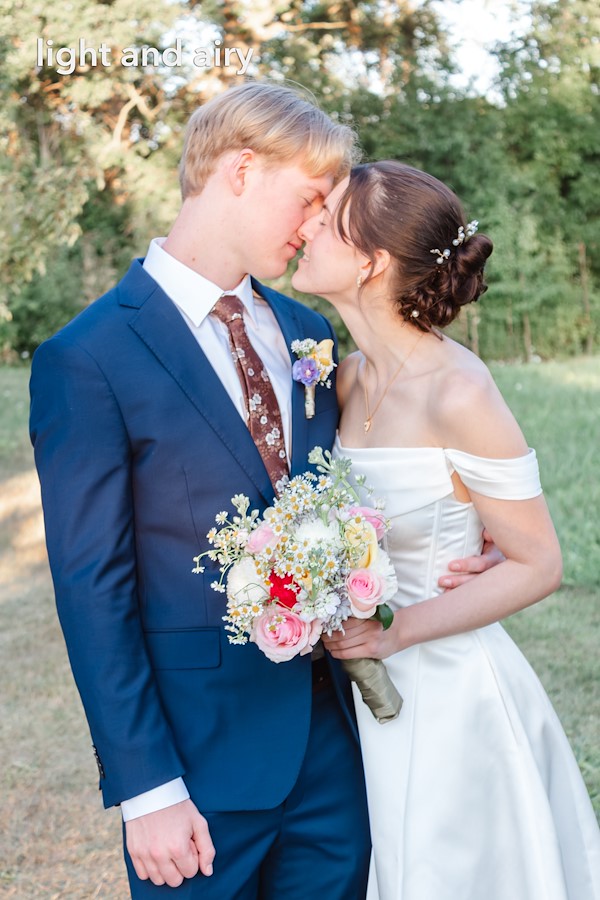
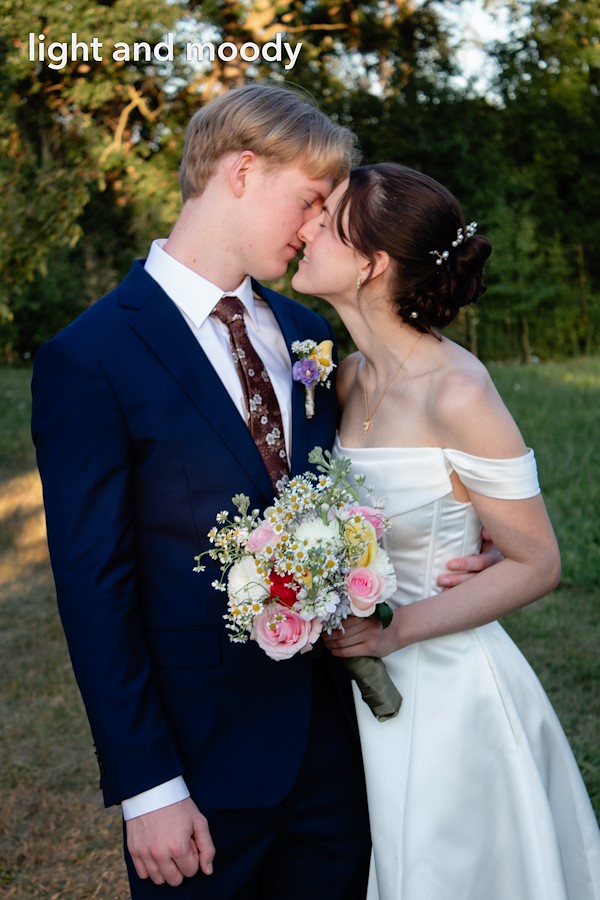
Light and Airy: This editing style focuses a lot on highlights. The photos truly feel airy. Colors are lighter, without affecting the couple's skin tones or hair color. These photos often have a light, happy emotion.
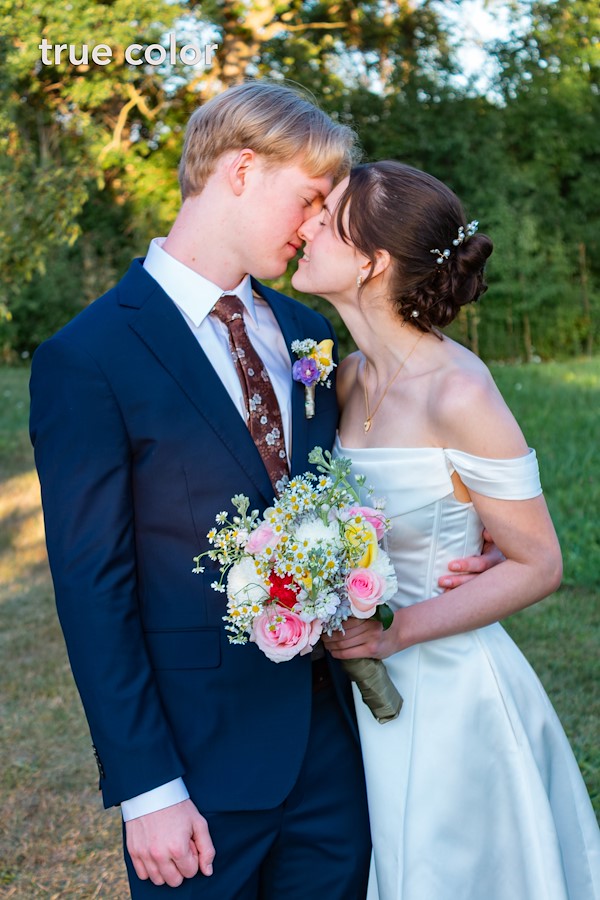
True Color: This style reflects photos as closely as they were taken as possible. The colors will best reflect the day itself with subtle enhancements if they day had a lot of grey skies. These photos often reflect a genuine emotion.
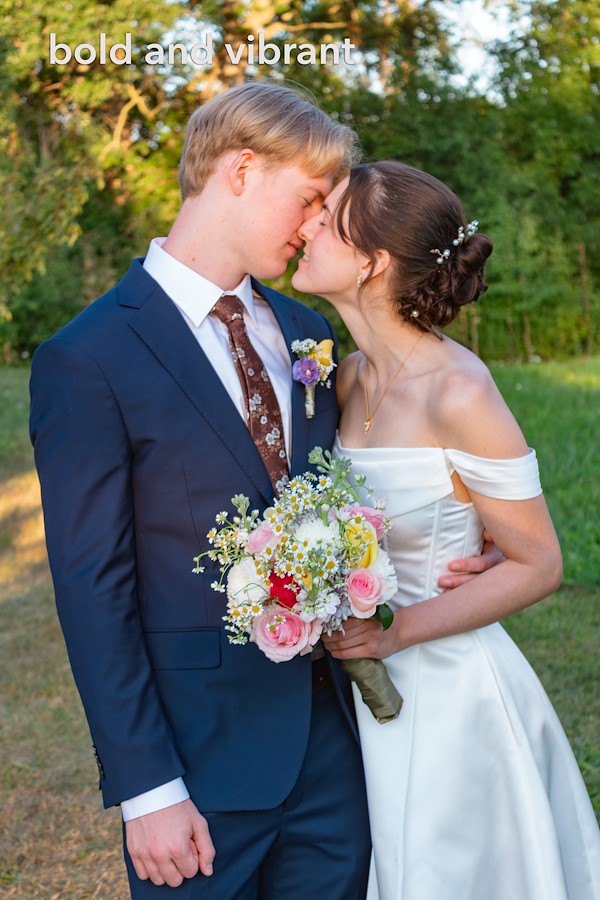
Bold and Vibrant: This editing style is an enhanced version of true color photography. Colors are stronger and more vivid. This style often gives a stronger emotion.
Light and Moody: This style has true colors with more depth in the shadows. They can feel darker due to shadows being stronger, but the colors reflect similarly to natural and the highlights can still pop. This style gives a mix of intimate and light emotions.
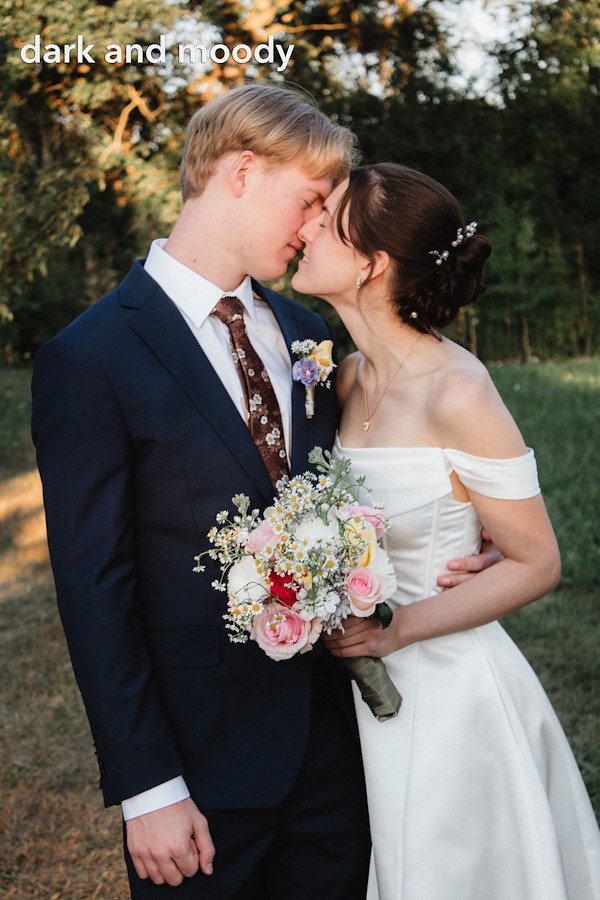
Dark and Moody: This style is found with deep shadows, high contrast, and rich tones. Photos often feel darker but more intimate and provoke deep emotion.
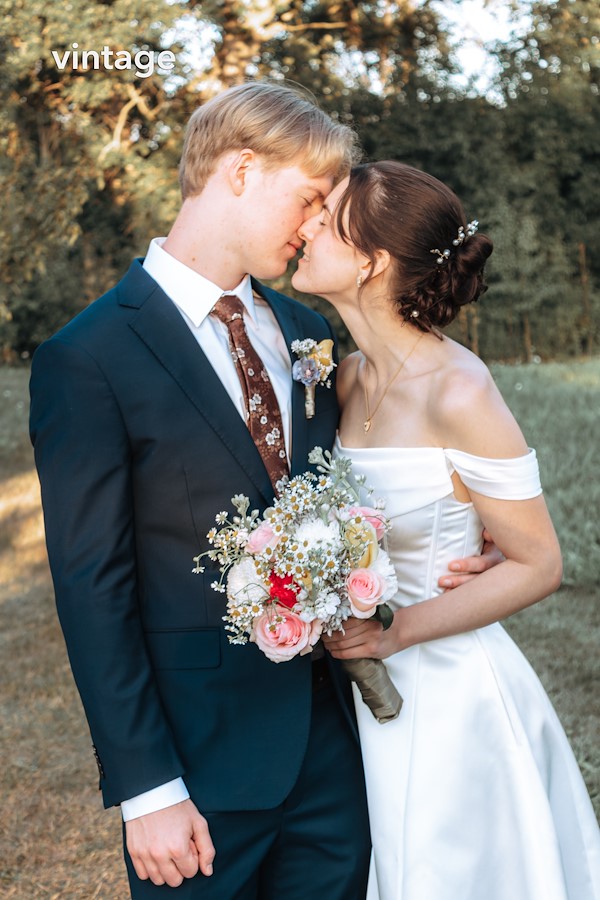
Vintage: This style will often reflect an older looking photo and can be warmer with muted colors. Sometimes a photographer will add "grain" into the photos as well to truly give off that vintage feel.
Monochromatic: This is a black and white style, but it is still an art. To make a black and white photo not feel flat, it requires a photographer's ability to still make highlights and shadows play off of each other to achieve high-quality photos. I always deliver a mix of monochromatic with my other photos, but I never substitute some color for some black and white, I personally duplicate photos so there is a black and white version and a color version.
There is no right or wrong answer to editing style. I typically fall in the true-to-color range and sometimes lean to a little more bold and vibrant if we're working with golden hour or sunsets. I don't oversaturate my own photos, and I like them brighter, but that's my own personal editing style, and I do have a deep love for light and airy styles as well.
If you're still not sure which editing style you prefer, I've added edited one of my photos in an example of each style. A quick Google search of "Light and Airy Wedding Photography," "True Color Wedding Photography," etc will also show a wide range of examples that will help you decide pretty easily when looking at pictures of one style in big groups.
A lot of photographers do have the ability to edit in different styles, as I've shown here by re-editing my own photo in different styles, but it's best to choose someone whose natural editing style already matches what you love. This will allow you to confidently look at their past galleries and know your wedding photos will have a similar feel.
Look At Full Galleries, Not Just Instagram Highlights
It is so important to see at least one full gallery of a wedding from a photographer (unless they are just starting out and don't have one to show). Highlights on a portfolio or social media page can really easily make it look like they produce great work, but there are some really important reasons to look for more than just the highlight photos.
Looking at full galleries is one of the quickest ways to check out the legitimacy of your photographer. Anyone can post a few photos that look good, but can they show you everything they captured throughout the day? No gallery will be filled with 100% perfect photos, but that's the beauty of wedding photography--it tells the story of your entire day and makes every moment from your day beautiful.
The full gallery will help you better understand your photographer and give you a much more accurate representation of what your entire day will look like in a gallery of its own.
When looking through a full gallery, pay attention to how consistently the photographer captures the day. Notice how they photograph in different lighting situations like getting ready indoors, outdoor portraits, ceremony lighting, and darker reception spaces. A strong photographer should be able to adapt quickly and remain consistent with their quality throughout the entire day, not just during perfect lighting.
Make Sure Your Photographer Has Wedding Experience
You might find a photographer that takes great portraits, but weddings are a different story. Weddings require quick adaptions to lighting changes, paying careful attention so they don't miss the moments that only happen once, and being able to read their couples.
Timelines are a huge part of a wedding day. A wedding day is full of individual events from getting ready, first looks, ceremony, reception, and more. An experience wedding photographer will know that running over on time taking portraits could lead to a late ceremony start time and will be able to keep things moving without making anything feel rushed. They'll be able to capture it all in whatever time blocks you may have.
An experienced wedding photographer adapts quickly. Amidst the fast lighting changes, there are also fast moments happening--dad wiping the tear from his eye, the groom's face when he sees the bride for the first time, the bride and mom's first look in the mirror together when the bride is ready to walk out the door. These are moments that can be staged again, but not genuine again. Your photographer's wedding experience ensures that they will be able to adapt and update their camera settings quickly without having to stop to think about it, so they won't miss any moments. Wedding photographers are able to multitask, and they do it insanely well for long periods of time.
Experience wedding photographers also come prepared with backup equipment and plans so nothing interrupts documenting your day.
A photographer doesn't have to be strictly a wedding photographer to be excellent at weddings--I do families, couples, newborns, and weddings, but I do to have experience in weddings. The photographer you choose should have experience handling weddings specifically.
Make Sure You Actually Like Your Photographer
Your photographer is with you more than anyone else on your wedding day. You don't want someone you can't enjoy being around for the entire day. No matter how much you like their style, it's not worth sacrificing your experience.
You don't have to spend a lot of time with your photographer to know if you like them or not. I do a video call with all of my couples to go over questions, plans, and to make sure we're a good fit before we book their date. By the end of the call, my couples know that I understand their vision and will bring their memories to life. Video calls are a quick and easy way to get to know your photographer's vibe.
If you haven't already taken engagement photos, setting up an engagement session with the same photographer you're wanting to book for your wedding is a great way to do a vibe check in an actual photography setting. Many wedding photographers have packages that include an engagement session. I love offering this to my couples because they get to see how I work behind the camera, and I get to see how they interact in real time.
Your photographer should make you feel excited, calm, and confident all at the same time. Having a photographer you genuinely like makes a big difference on your overall experience.
Ask About Contracts, Delivery, and Communication
One of the most important things when booking a wedding photographer is their contract. No matter how good they make you feel about the plans, do not ever skip the contract. The contract protects both you and the photographer. Unexpected things can happen to anyone, and you want to know for sure that your memories of your day are being treated seriously and are protected.
Not only should everything be in a contract, but it should be clearly written in the contract. It doesn't have to be a novel, a page or two usually covers everything thoroughly.
Things that should be in your contract:
Delivery Timelines: These tell you when to expect your photos by and holds your photographer liable to delivering the photos. It may also let you know if there will be sneak peaks sent ahead of time and how your photos will be delivered.
Backup Plans: Every good wedding photographer wants to and plans to be at your wedding, but every now and then, things happen that are truly out of their hands, like family/medical emergencies or serious injuries, so what's your photographer's backup plan? Many photographers will state that they will do everything in their power to find coverage for your day should something extreme happen, but it's still okay to ask them what that looks like. You want to make sure they will send a reputable replacement, not just any random person that was able to be there when they couldn't. Backup plans should be stated in your contract.
Cancellation Policies: Cancellation policies should be stated clearly. This covers both you cancelling the event and them cancelling on you. Things you'll want to look for include the amount of time required for notice (if any cancellation is allowed), if there are refunds/what can be refunded, and what constitutes as a fair cancellation if there is room for one in the contract. This keeps you and the photographer liable.
Image Rights: This should absolutely be included in your contract. Even with a section that talks about delivery timelines, this section covers what you are actually able to do with your photos after receiving them.
My contract states that images sent belong to my couples. They cannot be edited or altered in any way with the exception of cropping, so long as the integrity of the photo is preserved. This section in my contract gives my couples a surety that once they've received their photos, they get to enjoy them without limitation. Every photographer will have slightly different image rights in their contract, but it's important to read over this section and make sure it both makes sense to you and fits what you want to be able to do with your photos.
Product Delivery: What is being delivered? A photographer might not have a cap on how many photos they deliver to you or an exact number, but it is important that there is some minimum or guideline in the contract for how many images you will receive. Weddings galleries are large galleries for a reason--they have a lot of hours to cover and a lot of moments to be photographed. You want to make sure that your contract protects you receiving ample images for your day.
Contracts protect your investment in your day and protect your photographer who is setting time aside to capture your day and get your gallery put together. All dependable wedding photographers will have the option of a contract. I always recommend a contract, even if it's family friend that has had a great reputation for a long time. Great reputations don't always cover what happens when the unexpected happens. Having a game plan written up and holding you and your photographer accountable is the best way to ensure all the best things will happen for your day.
Questions to Ask Before Booking a Wedding Photographer
- How many weddings have you photographed?
- Do you have a full gallery I can review?
- Do you bring backup equipment?
- What happens if you're unable to attend?
- How long until we receive our gallery?
- Do you help with timeline planning?
I recommend adding your own questions you'd like to address with your photographer and then writing it all out, including questions about timelines and how many hours of wedding photography you may actually need. This keeps you organized and helps make sure you don't forget anything you wanted to talk about ahead of time. It'll help you feel more relaxed and confident in your decision to book or not book the photographers you talk to.
Choosing the Right Wedding Photographer
The best wedding photographer isn't the one social media tells you to book, they're the one that works best for you and your wedding day. They will have a style you love, professionalism, experience, and be someone you genuinely enjoy working with. They'll make you feel excited and confident as you think ahead to your wedding day and reflect with excitement while waiting for your photos to be delivered.
Finding your wedding photographer is much less overwhelming when you know what to look for and how to find it. If you're trying still trying to find your photographer or have more questions, I'd love to talk more. Reach out to me here and let's talk about your plans!